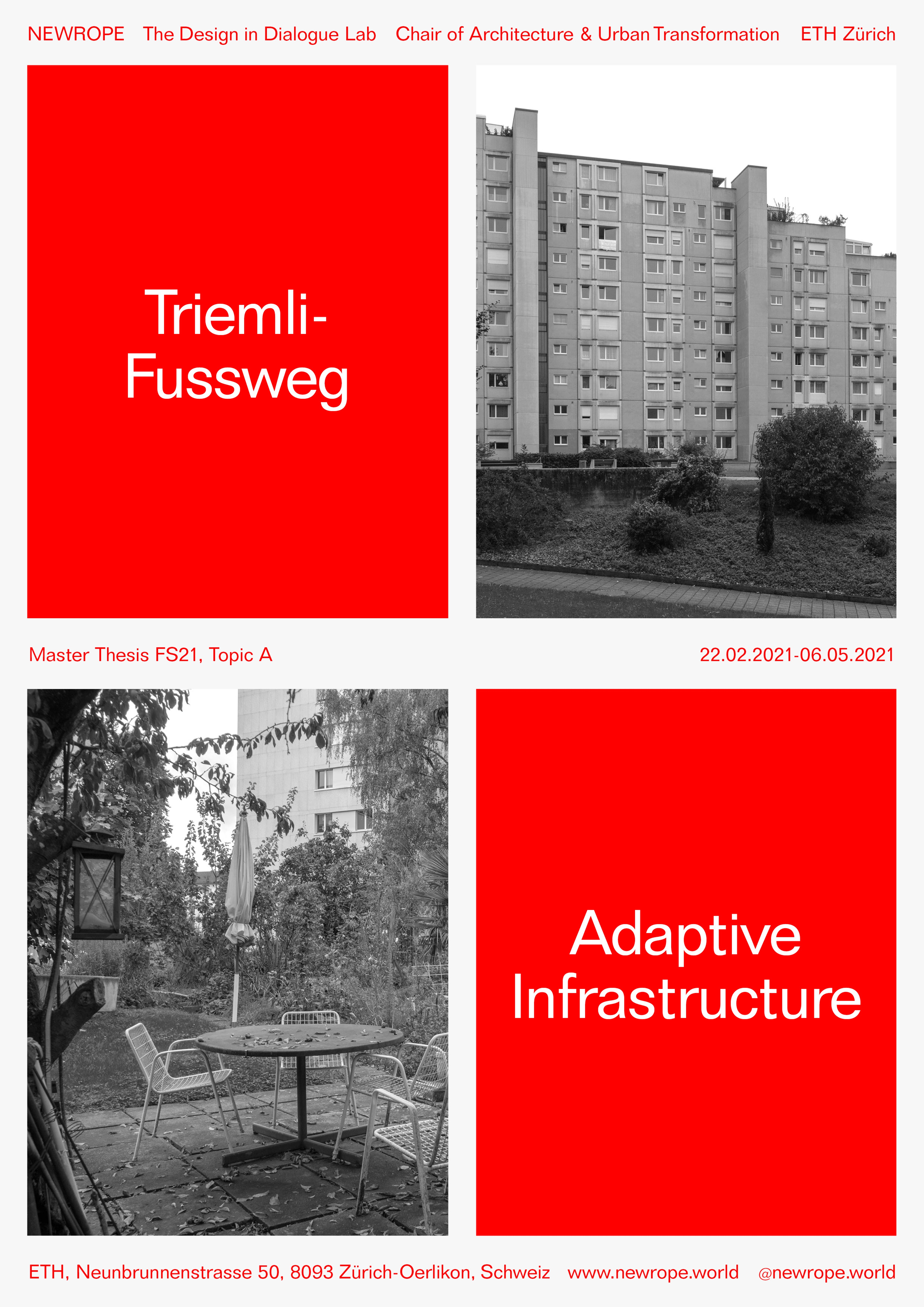
Master Thesis Triemlifussweg – Adaptive Infrastructure
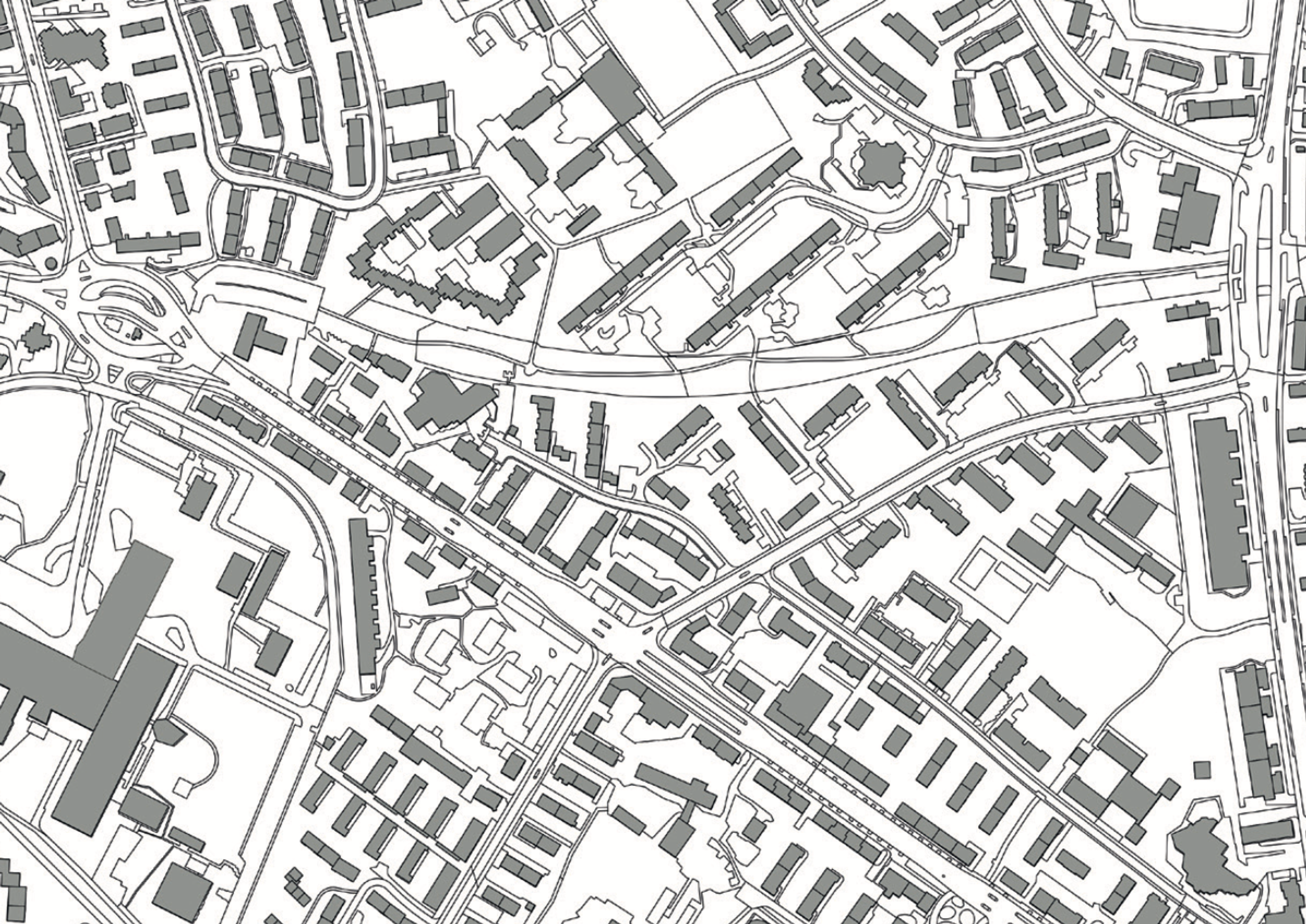
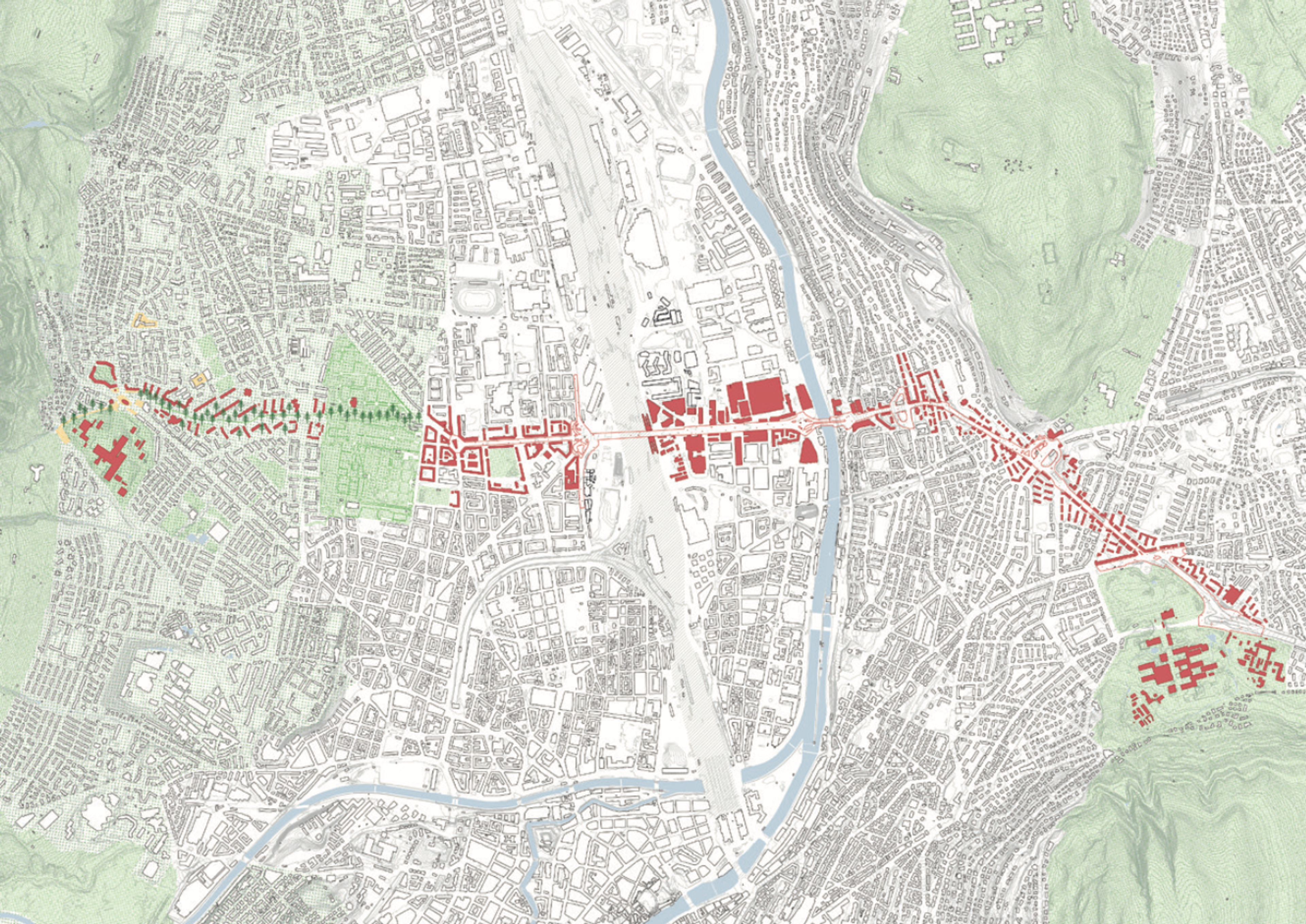
For the master thesis in spring 2021 we followed the Triemlifussweg. Coming from the city center, it passes through the open and green landscape of Friedhof Sihlfeld, flanked by large housing settlements from the 1970s, and leads up to Triemli Square at the foot of Uetliberg. If one zooms out, the path can be perceived as forming an axis together with Hardbrücke and Rosengartenstrasse, connecting Käferberg and Zürichberg with Uetliberg across the Limmat Valley.
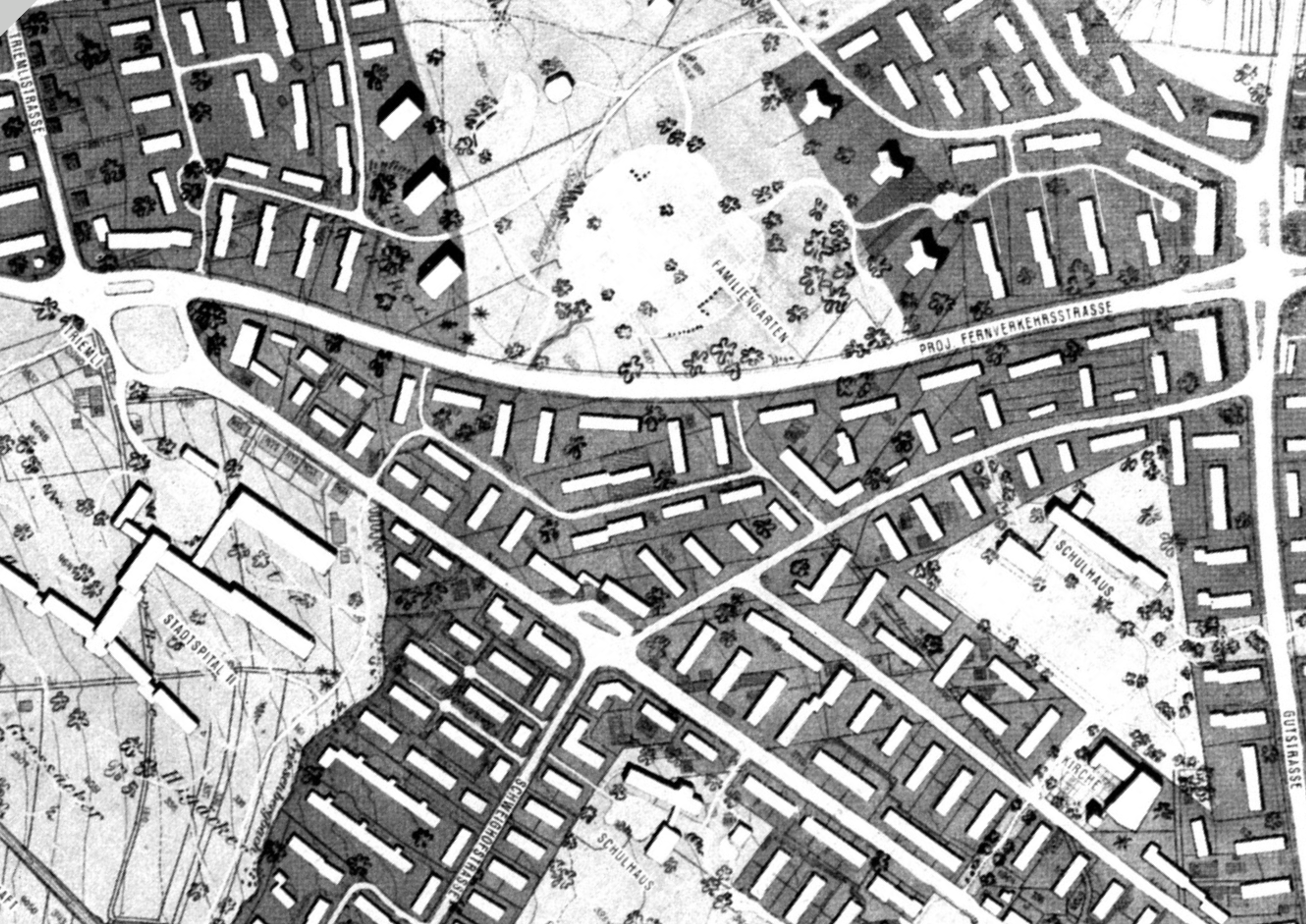
The Triemlifussweg itself has the spatial character of a street. Indeed, it was originally reserved as a plot for an urban highway, the Luzernerstrasse, intended to connect Albisriederplatz with Triemli Square.
This almost accidental condition gives the space its distinct quality: it was never planned as what it is today. Its ambivalent status invites exploration across scales. At the same time, it is embedded in broader processes of urban transformation. In recent years, several points along the described axis, like Escher-Wyss-Platz and Hardplatz have been redesigned as public spaces. Along the Triemlifussweg, buildings from the 1970s are currently being replaced by “Ersatzneubauten.”
We therefore ask: How can the Triemlifussweg be rethought as “adaptive infrastructure” – an infrastructure capable of absorbing and supporting social, ecological, and spatial change? How can it be transformed without losing its charm? And how might its qualities as an unplanned zone provide the environment for imagining more resilient urban patterns?
To get started, students were introduced to different actors who provided precise entry points into the topic, leading to a design in dialogue with the perspectives they offer on a Triemlifussweg in transition.
[Date] Spring 2021
[Format] Department Wide Master Thesis
[Place] Triemlifussweg, Zürich
[Studio Team] Lukas Fink, Seppe De Blust
[NEWROPE Students] Lea Maeder